Face Value
On Proprietary Dice in Miniatures Wargames

One of the odder little parts of our hobby is the special and often proprietary dice that games tend to put out with their systems. Most wargamers are used to regular threshold checks; roll at least a 4 on a d6 for a success. Often this is modified by a host of options: rolling 2d6, rolling an extra die and then dropping one of your choice, or adding numbers after the fact to the roll, but the core concept remains. Proprietary dice tend to be different; these clicky clacky math rocks often break with the standard d6 to d20 curves we’re used to with a host of different symbols and letters that don’t correspond to a standard counting system. I want to take a moment to try and lay out how I think about proprietary dice, what benefits they can bring, and some frustrations about where they can fail. One important thing to note is that unique dice can have value outside of game use; I own enough branded dice from various sources to attest to that. I don’t want to get over my skis talking about their potential marketing and business cases so I’m going to stick to what they do at the table for this essay.
Let’s start by exploring two ideas about unique dice. The first is how they can enable mechanical complexity beyond simple thresholds of success or failure, often by encoding different results into the dice face that aren’t a simple numeral output. This is a scale of complexity, with the most basic version being threshold rolling where anything above a certain number is a success. Roll three dice, any 4+ is a success. Count your successes and you’re good to continue. The next step up, and often most common, adds effects to the edges of the spectrum, such as a 6 on a d6 always being a success and a 1 always a failure. You’ll see this sort of floor and ceiling in most games of Warhammer. This goes all the way up to high complexity games where every face has a unique set of symbols that interact in different ways with your unit abilities and you need to count them up or add them in various ways to resolve your plays.
The second factor is much more a factor of player experience and how they interact with rolling dice than one of strict mechanics. One common issue with rolling many dice at once is being able to quickly count successes and failures. This is harder still when the number of sides on a die increases and thus the actual faces become smaller, or when you want to roll multiple kinds of dice at once with different thresholds. Moving to clear symbols instead of pips or numbers that always indicate a success or failure can help alleviate this, where you simply scan for successes instead of trying to apply different thresholds to different dice colors. This is a form of Pool Legibility, about how you take different dice with different possible outcomes and make them clear for both players to read at a glance. Star Wars Legion is a good example of high Pool Legibility, where you have multiple colored dice that differ in the number of successes on them. A player doesn’t need to worry about the underlying thresholds that Red, Black, or White dice represent, just count up the successes and special symbols to know the outcome. This shortens the learning curve for people new to the hobby as well and lets them jump right into playing without worrying about keeping as many numbers in their heads.
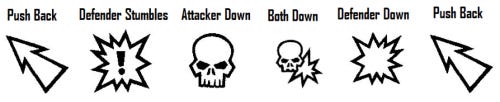
The most well-known version of high complexity dice is probably Blood Bowl’s Block dice, which are d6s with 5 different faces (one repeated twice): Attacker Down, Both Down, two Pushes, Defender Stumbles, and Pow! These are somewhat increasing severity of result but each outcome is categorically different from the other ones in terms of its game result; any attempt to replace them with regular dice will require a lookup table to be referenced or memorized. You don’t tend to roll many dice at once and they tend to be of the same type so Blood Bowl isn’t working with heterogeneity. Overall, the core concept of encoding different categories of results into faces on a die works well for quick resolution.
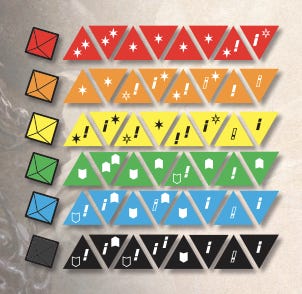
Warcrow is an example of a game that maximizes both mechanical complexity and the heterogeneity of its dice; there are six different kinds of d8, three for offense and three for defense with a mixture of six different symbols: Hits, Blocks, Specials, and then Hollow versions of those three. Hits and Blocks are used to cancel each other out while Specials and Hollow versions of Hits and Blocks can activate special abilities. There is not a basic threshold system here either; a character might want a Special to enable it to push an enemy, a Hit to push through more damage, or a Hollow Hit to cancel out two Blocks. Some units throw Attack dice on defense to let them strike back or Defense dice on offense to let them Block those potential hits. Players can sometimes “fix” dice before you roll them to only show a certain face to add decision making to any given roll, as you can easily have four different kinds of dice in a roll, each of which has a unique set of outcomes that you will want to pick based on the situation on the tabletop. Thus having its own set of dice makes using its unique system both possible and easy to understand in practice.
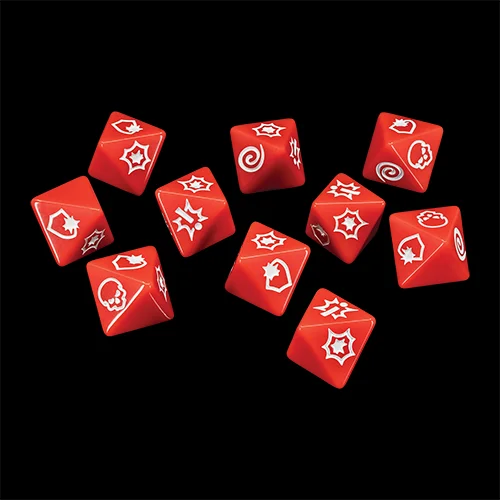
Marvel Crisis Protocol is a game whose dice seem to be highly complex; it’s a d8 with 6 different results. In practice though it’s mostly a threshold system with an extra kind of critical success. You have 1 Critical Success, 1 Wild (successes with a special effect), 2 Hits (a success on offense), 1 Block (a success on defense), 2 Blanks (Failures), and 1 Skull (Critical Failures you cannot reroll). Effects that let you count a Block as a success on offense are effectively +1 to your roll while counting Blanks is +2, similar to a threshold system. This framing, however, can hide genuine depth in how the system can let players engage with their characters and opponent’s abilities. Some characters, such as Captain Marvel, let you change enemy successful hits into blanks to negate them. This seems on the surface to be a normal wargame ability to discard enemy successes, but this can then run into other characters who then count those blanks as successes! The layers of interactions are what make MCP so interesting as heroes and villains have play and counterplay to their abilities. Other characters can change what they consider successes after seeing the dice rolled; this wouldn’t function well in a threshold system where suddenly you would succeed on a 5 or 8, but with symbols on dice it becomes a much more intuitive way to salvage a bad roll. The system works, enabling real mechanical choice under the hood while not adding much of a cognitive load to players to engage with.
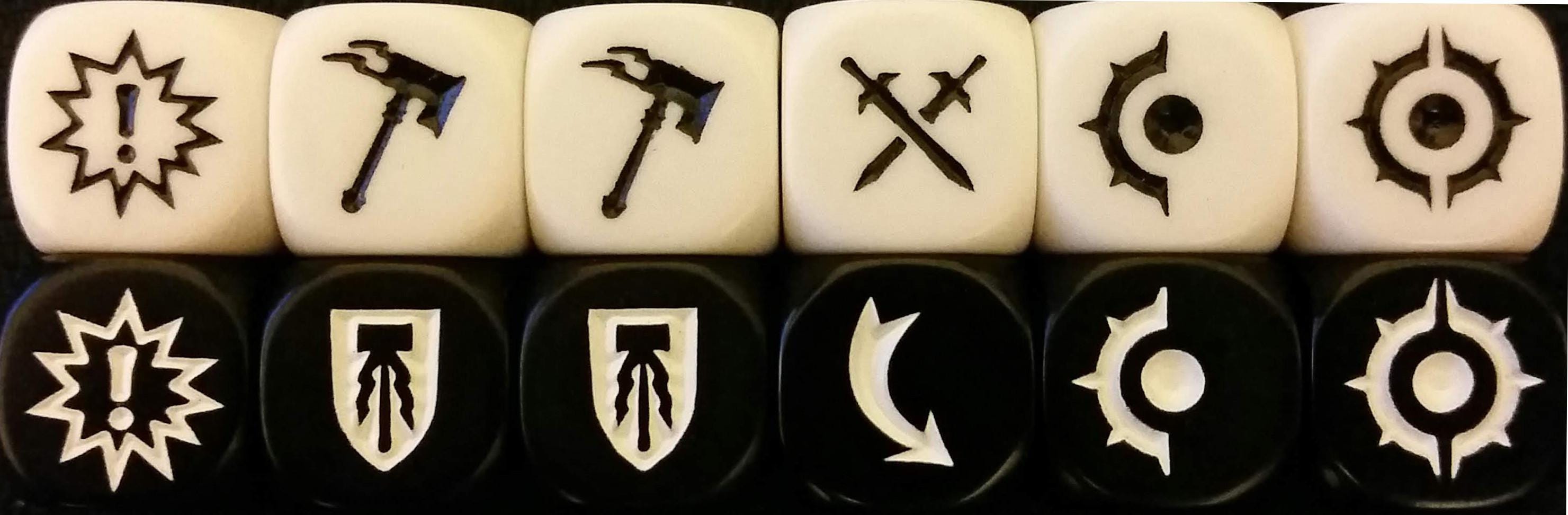
I’ve brought forth several games that I believe use their dice for a decent to great extent. Let’s now examine some failure cases. Warhammer Underworlds starts with a similar mixed results system to MCP but does little with it, leading to what is effectively a threshold system in practice. In this game you have 1 Critical, 1 Swords/Dodge, 2 Hammer/Blocks, 1 Solo Support, and 1 Dual Support, with a character’s successes being tied to their card saying if they count Swords or Hammers on offense and Dodge or Block on defense. In practice this mostly means that you hit or dodge on either 4s or 5s with the unique Attack and Defense dice being interchangeable while support adds +1 per Support to a maximum of +2. The primary interaction that the system has with these symbols is that some abilities such as Cleave (cancels Blocks) or Ensnare (cancels Dodges) can take you to only succeeding on 6s before support if they match up into your defense type. This is not meaningfully different from saying that Defenders with a Block keyword suffer -2 to their defense rolls against characters with Cleave. It’s not a mechanic that saves time or makes reading dice that much easier in practice compared to the other games mentioned and instead just serves to, at best, slightly simplify what is in practice a threshold system.
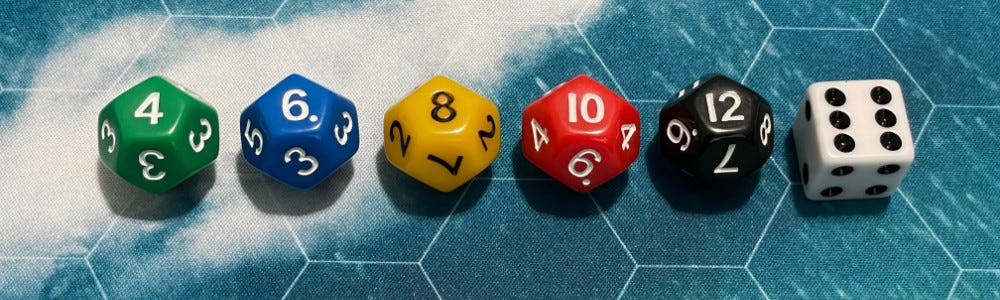
Another game whose dice don’t do enough of a lift to justify their inclusion is Leviathans. This game takes the decision to have colored dice, each of which corresponds to a size d4 to d12 in terms of effective outcomes, but instead of using actual d4s or d8s the game uses d12s with manipulated numerical facings. This is a perfectly neutral gimmick for a d4 or a d6, where they just multiply the number of faces and can thus be replaced easily by a player using actual d4s or d6s. The game then proceeds to get very awkward with d8s and d10s when they instead add in more faces for 4s and 7s (and then 2s and 5s as well for the d10) in order to fill up a d12. This changes the probability curve but not in a way that the game really interacts with; it’s simply different and prevents you from substituting in your own dice and maintaining the same results. Using colors to code in your dice sizes is very reasonable for the sake of quickly converting rules to physical rolls, but the decision to use slightly off d12s instead of the actual underlying die is baffling and adds nothing.
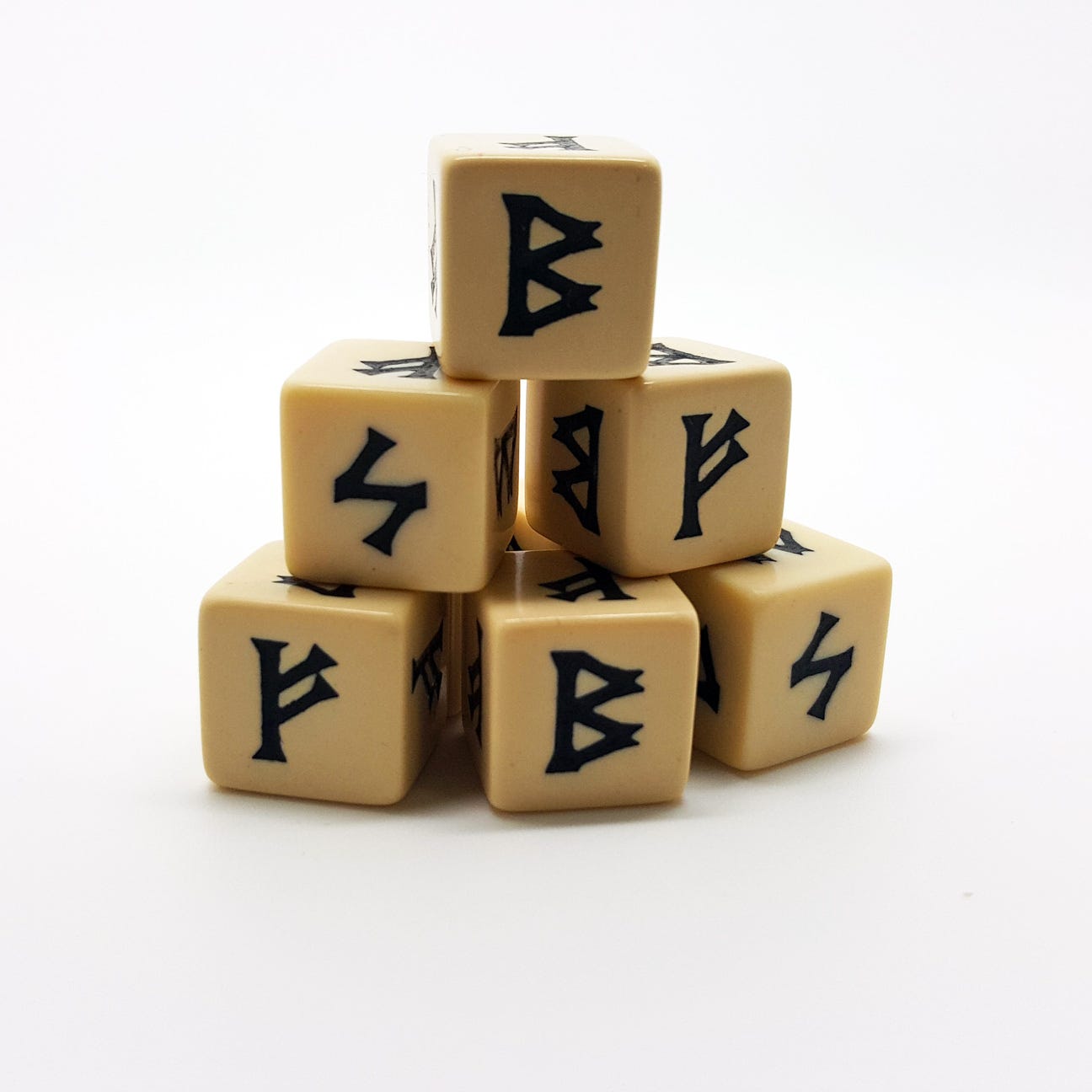
The other side of complex encoding and unique dice is Saga, a game where it uses both regular and unique dice but keeps the unique dice so simple that players can entirely stick to a set of regular d6 if they desire. Your entire resource system is based around rolling up to eight d6 and categorizing them as Common (1-3), Uncommon (4-5), and Rare (6) and then spending specific types of dice for different effects. This is not a threshold system – abilities may only activate using specific rarities, so a Rare is not effectively just a Common+. However, as it has a one-to-one mapping with a regular d6, it takes almost no thought to play without proprietary dice. You get a rich resource mechanic without extra overhead that you can engage with using cool dice but that doesn’t require it of the player.
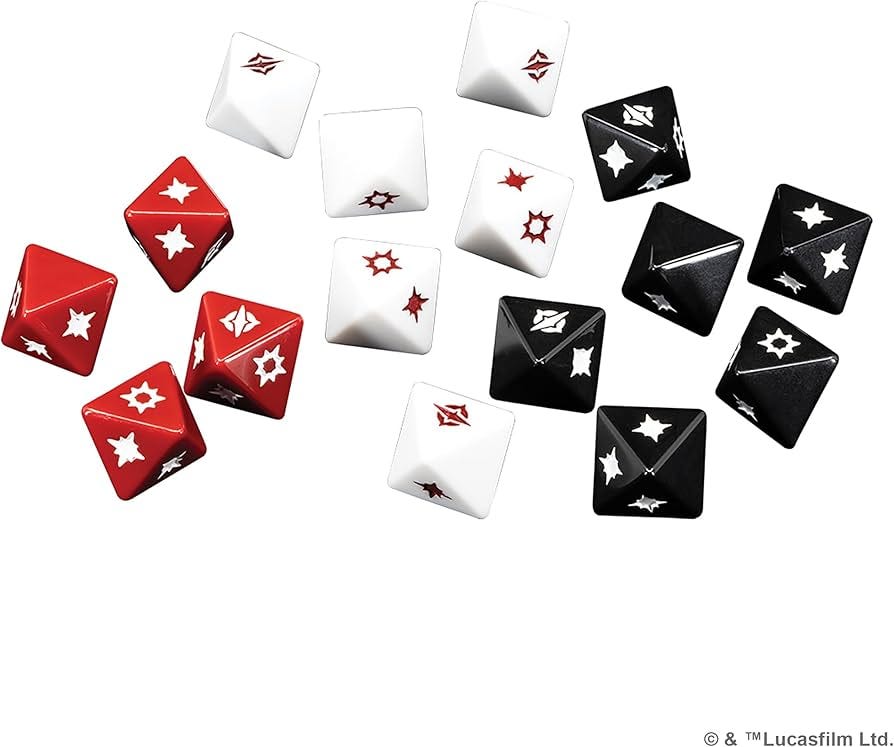
To close this out, let’s look at Star Wars Legion, a game that has a fairly basic level of complexity to its dice with successes, surges, and fails as the three possible results. The first and last are fairly straight forward, with surges being a situational hit depending on unit and resources spent. It does, however, use multiple colors of d8s, each of which has different amounts of Hits on them to allow players to quickly roll multiple thresholds and count them instead of having to parse out which color corresponds to what success rate, making for a much faster and easier resolution. You don’t gain much value on any individual die from being unique, as you only ever have a single surge result, but the mix of die types makes rolling several at once and just counting symbols much easier than applying threshold checks.
Proprietary dice work best when they have a clear purpose in mind. They may allow players to adjust probabilities or mess with expectations, to chuck a bunch of dice that have different results and easily see what the outcome is, or maybe just turn what is normally a lookup table into an easy to understand set of results that can make hearts beat faster or shatter on the tile floor of the game store. Their failure comes from when they are simply less useful versions of regular dice that only work for the game they were designed for without adding anything of value. Used well, these dice can add something to the feel of a game, either by having medium to high levels of complexity that isn’t available through standard rolls or adding legibility to bigger sets of rolls. But otherwise, I’ve got a giant collection of random D6s and if you can’t make a good argument for why your dice are better than using that pile, maybe your game doesn’t need special dice.